
Compliance
Missed Call Text Back Compliance: A2P 10DLC, Consent and Opt-Out
Texting customers from a business number in the US is not like texting a friend. Carriers expect you to register, federal law covers automated texts, and industry guidelines set the tone for consent and opt-outs. None of this is hard for a missed call text, but skipping it can mean blocked messages and complaints.
This page sums up what matters for missed call text back, with links to the official sources: CTIA, the FCC, The Campaign Registry and HighLevel’s own help center. It is general information, not legal advice. If your business is in healthcare, finance or another regulated field, have a qualified lawyer review your setup.
For the basics of the feature itself, go back to the missed call text back guide.
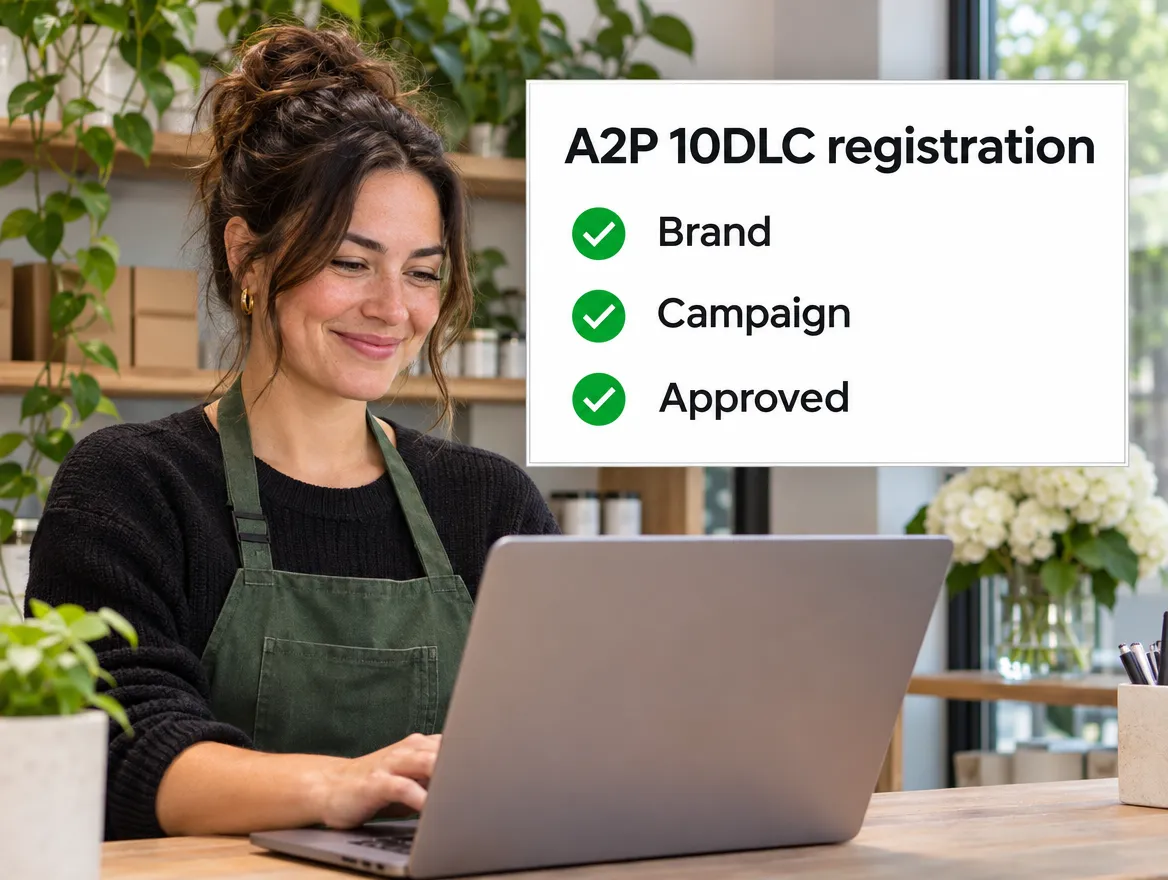
What is A2P 10DLC?
A2P 10DLC is the US carrier system for business texts sent from normal 10-digit phone numbers. “A2P” means application-to-person. Before you send, you register your business as a Brand and your use as a Campaign, so carriers know who is texting, why, and how people agreed to it.
The Campaign Registry (TCR) runs the registration database. TCR says brands cannot register with it directly; they register through a Campaign Service Provider, which for most small businesses is their texting platform. In GoHighLevel, that platform is LC Phone, and registration sits under Settings, Phone System, Trust Center.
HighLevel’s article What is A2P 10DLC: Brand and Campaign Registration explains the two parts:
- Brand: who is sending. Standard Brands are for businesses with an EIN or other registration number. Sole Proprietor Brands are for individuals or one-person businesses without one. HighLevel says a business that has a Tax ID should register as a Standard Brand.
- Campaign: what you send, why, and how people opt in. Campaigns need a message frequency disclosure, HELP and STOP information, a privacy policy and terms and conditions, and sample messages with opt-out language.
Do you need A2P 10DLC for missed call text back?
Yes, if you send from a local 10-digit US number. HighLevel’s Missed Call Text Back article says at least one number in the sub-account must be verified and eligible to send SMS: A2P 10DLC registration for local numbers, or toll-free verification for toll-free numbers. Plan for registration before launch.
Toll-free numbers follow a different path. HighLevel’s toll-free verification guide says verification is required before a toll-free number can send SMS or MMS to US or Canadian recipients. It lists a live website, business details, opt-in method, sample messages, and since September 15, 2026, both a privacy policy URL and a terms URL. HighLevel says review can take up to four to six weeks.
How long does registration take and what does it cost?
HighLevel does not promise a fixed approval time for A2P 10DLC. Campaigns can stay pending during review, and carriers may need several business days after approval. Fees are set by TCR, Twilio and carriers and passed through at cost: $22.50 one time for small brands, then a monthly campaign fee, as of November 2026.
From HighLevel’s A2P 10DLC fee article, as of November 2026:
| Registration type | One-time fee | Daily limit HighLevel lists |
|---|---|---|
| Sole Proprietor | $22.50 | 1 number, 3,000 segments per day |
| Low Volume Standard | $22.50 | Multiple numbers, 6,000 segments per day |
| High Volume Standard | $64.00 | Multiple numbers, 600,000 segments per day |
HighLevel says these bundles include campaign vetting and a $3 fast-track fee. Extra campaigns under the same brand cost $15.00 each to vet, and resubmitting a rejected campaign has no extra vetting fee.
| Campaign type | Monthly fee |
|---|---|
| Sole Proprietor (Starter Campaign) | $2.00 |
| Standard use cases | $10.00 |
| Low Volume Mixed | $1.50 |
| Charity / 501(c)(3) | $3.00 |
| Emergency services | $5.00 |
Do you need consent to send a missed call text?
Consent rules depend on what the message is. CTIA says that when a consumer starts a text conversation and the business only responds with relevant information, no extra permission is expected. A missed call is a phone call, not a text, so treat your message as a single, relevant reply and keep marketing out.
The CTIA Messaging Principles and Best Practices (May 2023 edition) sort business texts into three types:
| Type | CTIA’s description, in short | Consent CTIA expects |
|---|---|---|
| Conversational | Back-and-forth that the consumer starts; the business replies | Implied: no extra permission expected |
| Informational | The consumer gives their number and asks to be contacted, such as reminders and alerts | Express consent (verbal, written or by text) |
| Promotional | Messages with a sales or marketing promotion | Express written consent |
CTIA also notes that adding a call to action like a coupon code to an informational text can make it promotional.
Here is the honest part: no official source we found says a missed phone call is the same as a consumer texting you first. The CTIA table talks about the consumer starting a text exchange. A missed call text sits close to that idea, since the person contacted you first and you are replying, but you should not stretch it. Keep the message to one helpful reply about their call, and save sales offers for people who have given written consent.
The federal side is the Telephone Consumer Protection Act (TCPA). The FCC’s April 2025 order DA 25-312 summarizes it this way: the TCPA generally requires anyone sending robotexts, meaning texts sent using an autodialer, to get the recipient’s prior express consent, unless an emergency purpose or exemption applies. Whether a given system counts as an autodialer and what consent you have are legal questions. A lawyer can answer them for your setup.
How must you handle STOP and other opt-outs?
Honor opt-outs fast and completely. The FCC says replies of “stop,” “quit,” “end,” “revoke,” “opt out,” “cancel” or “unsubscribe” are reasonable ways to revoke consent, and requests must be honored within a reasonable time of no more than ten business days. You may send one confirmation text without marketing.
The details come from the FCC’s 2024 TCPA consent order, FCC 24-24:
- A reply with any of those seven words counts as a reasonable way to revoke consent.
- Revocation must be honored within a reasonable time, not more than ten business days.
- A one-time text confirming the opt-out is allowed if it only confirms the request and has no marketing. If sent within five minutes, it is presumed to fall within the consumer’s prior consent.
CTIA’s guidelines say the same in industry terms: use standard “STOP” wording in opt-out instructions, but also act on normal phrases like “please opt me out,” and ignore differences in capitalization or punctuation. CTIA also recommends one final confirmation message and nothing after it.
Most platforms process STOP automatically. HighLevel’s help article says contact do-not-disturb settings are respected by Missed Call Text Back. Still, test it. Text STOP to your own number and make sure the contact is blocked from further texts.
What changed in the FCC rules in 2025 and 2026?
The FCC has adjusted one part of its revocation rules several times. The “revoke all” requirement, which would make an opt-out from one type of message apply to all unrelated messages, was delayed to April 2026, then to January 31, 2027. In late 2026 the FCC adopted changes that narrow it.
The timeline, from the FCC’s own documents:
- February 2024: The FCC released the TCPA consent order (FCC 24-24), adding the revocation rules above.
- April 7, 2025: Order DA 25-312 delayed the “revoke all” part until April 11, 2026.
- January 6, 2026: Order DA 26-12 extended that delay to January 31, 2027.
- September 30, 2026: The FCC adopted order FCC 26-67, released October 1, 2026. It lets senders treat a revocation as applying only to the category of informational messages it responded to, and lets senders name an exclusive way to opt out, such as replying with standard words, if they clearly disclose it. It takes effect 30 days after Federal Register publication, and the FCC said it would announce the exact date in a Public Notice.
For a missed call text, the practical advice does not change: include “Reply STOP to opt out,” honor it right away, and do not text that person again unless they contact you and you are only replying.
What should your campaign registration say?
Describe the use honestly and specifically. Say that you send a single text to people who called your business and were not answered, that it invites them to reply, and that it includes STOP instructions. Submit sample messages that match what you will actually send, with your business name in them.
Things registration reviewers look for, based on HighLevel’s A2P article and CTIA’s guidance:
- Accurate opt-in description. HighLevel says consent must be verifiable and the opt-in accurately described. For missed call text back, explain that the customer called your published business number.
- Business identification. CTIA’s call-to-action guidance includes naming the organization that is texting.
- Sample messages with opt-out. HighLevel notes sample messages should include opt-out language.
- Privacy policy and terms. Both should be live on your website and explain how you use phone numbers and messages.
- Matching use case. If you also send appointment reminders or promotions, those need to be covered by your campaign and consent, not slipped into a missed call text.
What about healthcare and HIPAA?
If you are a dental office, med spa or other healthcare provider, keep health information out of missed call texts entirely. A generic “Sorry we missed your call” message carries little risk. If you plan to text about treatments or appointments, you may need a HIPAA-compliant setup and a business associate agreement with your software vendor.
HighLevel says its accounts are not HIPAA compliant by default and sells a HIPAA add-on for $297 per month as of November 2026, according to its HIPAA compliance article. HighLevel also says the add-on cannot be canceled, refunded or downgraded once enabled, so read the terms before you buy. More on this in missed call text back for dental offices and med spas.
A short compliance checklist
Before you switch missed call text back on, confirm the basics: registered number, honest campaign, a message that identifies you and explains STOP, no marketing in the text, opt-outs that work, and a live privacy policy and terms. Then test the full loop from a personal phone.
- Your number shows as registered or verified in your platform.
- The message names your business and includes “Reply STOP to opt out.”
- There are no offers, coupons or upsells in the text.
- Health, financial or other private details are left out.
- STOP replies block further texts, and the team knows not to text that person manually.
- Your privacy policy and terms are published.
- You keep records of opt-ins and opt-outs, as CTIA recommends.
Next, see compliant wording in missed call text back message examples or check the fees in the cost breakdown.
Affiliate note: we may earn a commission if you sign up for GoHighLevel through our link. See our affiliate disclosure.
Turn missed calls into conversations.
Start the free trial, set things up with your own data, and cancel before it ends if it isn’t right for you.
Affiliate link. See our disclosure.
FAQ